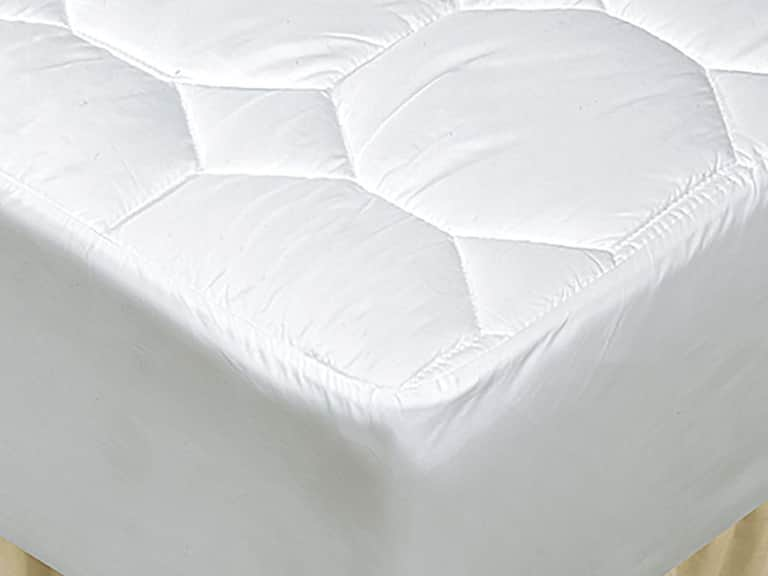
A bed is often described as a piece of furniture, but in a room where someone spends much of the day, it becomes something more consequential: a surface for rest, transfer, repositioning, dressing, and care. A new layer placed on that surface may seem like a modest intervention. It can also alter the height of the mattress, the way a person settles into it, the friction involved in moving, and the relationship between the sleeper and the equipment around the bed.
Latex pads and mattress overlays are sometimes considered for their cushioning and resilience. They may change the feel of an existing mattress without replacing it, and their springy character can appeal to people who dislike sinking deeply into foam. But the phrase “pressure-relieving” is not a synonym for “soft,” and a comfortable overlay is not automatically a clinically appropriate one. The right decision depends on the person’s health and mobility, the condition of their skin, the bed’s configuration, and advice from the clinicians involved in their care.
That distinction matters most when a caregiver is trying to solve a problem that seems visible and immediate: a mattress feels hard, a loved one is uncomfortable, or a red patch has appeared. Bedding can affect comfort. It should not be asked to stand in for an assessment of a new or worsening skin concern.
What a latex pad can—and cannot—do
Latex is an elastic material made from natural rubber, synthetic rubber, or a blend, depending on the product. In bedding, it may appear as a thin comfort layer, a thicker mattress topper, or a purpose-designed overlay. These terms are not used consistently across the market, so a product’s name alone tells a caregiver little about its intended role. Thickness, construction, cover, and stated use all deserve attention.
A comfort pad can alter the surface feel of a mattress. It may add cushioning, change how the body is supported, or make an older sleep surface feel less unforgiving. Those are meaningful benefits when comfort is the principal goal and the pad is compatible with the bed. They do not establish that the product is suitable for pressure-injury prevention or treatment. Clinical pressure redistribution depends on more than softness: it involves how a surface responds to the body, how pressure and shear are managed, and how the person’s position and condition are monitored.
Care plans should therefore distinguish a household mattress pad from a medical support surface. A general-purpose latex overlay may have no clinical performance claims, and its materials or dimensions may not have been evaluated for a particular care need. Even a product described as supportive or pressure relieving should not be treated as a substitute for individualized professional guidance.
For someone at elevated risk of pressure injury, or for a person who already has a wound, the first conversation belongs with a qualified healthcare professional—such as a nurse, physician, or wound-care specialist familiar with the individual. That professional can consider mobility, sensation, circulation, nutrition, moisture exposure, existing skin changes, and the full bed setup. The answer may involve a different mattress or support surface, a repositioning plan, equipment adjustments, or several measures together. A pad, on its own, cannot make that decision.
Begin with the person, not the product
Before comparing latex pads, clarify what the caregiver hopes to change. Is the person asking for a softer surface? Is the mattress uncomfortable during transfers? Is there a concern about spills or perspiration? Has a clinician recommended an overlay? These are separate problems, and one product may not address all of them.
Mobility is especially important. Someone who can turn and reposition independently may interact with a surface differently from someone who needs assistance, has limited sensation, or remains in bed for extended periods. A more yielding layer can affect how easily a person shifts, sits up, or moves toward the edge. The pad might feel pleasant when lying still but make transfers more difficult. Conversely, a person may find a very firm surface uncomfortable. There is no universal firmness that suits every care situation.
Skin condition also changes the stakes. Persistent redness, broken skin, a blister, unusual warmth, swelling, or pain should prompt attention from a healthcare professional, especially when the person has reduced sensation or difficulty communicating discomfort. Caregivers should not assume that a new pad will correct the problem. Nor should they massage an area of redness without professional direction. The appropriate response depends on what is happening and the person’s care plan.
Comfort observations can still be useful. Caregivers may note whether the person sleeps more comfortably, whether they can reposition as usual, and whether the surface appears to affect transfers. These observations are not a diagnosis, but they can make a conversation with a clinician more concrete. A brief record of when discomfort occurs, where it is felt, and what changes when the person moves can be more useful than a general report that the bed is “not working.”
Fit is a safety issue
A pad should fit the mattress as intended, without bunching, curling, or shifting into folds. A loose or poorly sized layer can create uneven areas beneath the body and interfere with a smooth sleeping surface. Check the manufacturer’s dimensions and maximum mattress depth, then compare them with the actual mattress, including any existing topper or protective layer. A nominal size—twin, full, queen, or king—does not guarantee that the pad will fit a particular mattress and bed arrangement.
Pay attention to how the pad is secured. A fitted skirt, elastic bands, or another fastening method may behave differently on a thick mattress, an adjustable bed, or a mattress with a specialized cover. The pad should remain in its intended position during ordinary movement. If it migrates, forms ridges, or pulls tight at the corners, stop and reassess the fit rather than relying on repeated smoothing as a permanent fix.
The bedding stack matters. Each additional layer can change the height and feel of the sleeping surface. A deep mattress plus an overlay, protector, and fitted sheet may leave little room for the sheet’s elastic to hold securely. Loose bedding can also become an obstacle during care or transfers. Keep the arrangement simple enough that caregivers can inspect it, make the bed safely, and see whether the pad is staying flat.
Bed rails require particular care. Adding a pad can raise the mattress relative to the rail, reducing the space between the mattress and the rail or changing the effective height of the barrier. A rail that appeared appropriately positioned before the change may no longer provide the same configuration. Gaps between a mattress and a rail can present serious entrapment hazards. Do not improvise with a pad, extra padding, or wedged materials to close a gap. Ask the equipment provider or healthcare professional responsible for the bed setup to assess compatibility.
Adjustable beds create another test. A pad that lies flat when the bed is level may bunch, slide, or pull when the head or foot section rises. Before regular use, check the bed through its normal range of movement while the person is safely attended. Look for displaced fabric, tension at the corners, or a change in the person’s position. If a bed’s instructions specify compatible mattress or accessory types, follow them; when uncertain, contact the manufacturer or equipment supplier.
Movement, friction, and transfers
When people move across bedding, the surface and the fabrics above it can influence friction and shear. Caregivers sometimes use “friction” to describe the force that makes a body difficult to slide; “shear” refers to tissues being pulled in different directions as the body and skin move relative to one another. These forces can be relevant to skin health, but they are not assessed by simply pressing a hand into a pad.
Latex’s resilience may feel supportive to one person and restrictive to another. The important question is how the sleeper moves on it. Can they turn without undue effort? Can a caregiver reposition them using the methods taught by the care team? Does the layer make it harder to sit at the edge of the bed or stand during a transfer? A surface that changes the way a person moves should be reviewed, particularly if the person already needs assistance.
Caregivers should follow the transfer and repositioning guidance provided for the individual rather than attempting to compensate for an unfamiliar surface with extra force. If equipment such as a transfer aid is part of the care plan, its suitability may depend on the bed height and surface. A change in bedding is a reasonable moment to check that ordinary routines remain workable.
Latex sensitivity and material disclosure
Latex sensitivity is not one simple category. Some people have an allergy to natural rubber latex; others may experience irritation or have a different sensitivity altogether. A label that says “latex” does not, by itself, explain the precise material, and a label that says “natural” does not establish that a product is safe for someone with a known allergy. When allergy is documented or suspected, consult the person’s clinician and examine the manufacturer’s material information before bringing the pad into the care environment.
Ask what the product contains and whether the latex is natural, synthetic, blended, or present only in a component such as an elastic edge. Also ask whether the cover fully encloses the material, whether it can be removed, and whether the manufacturer gives guidance for people with latex allergy. Do not rely on appearance, smell, or a brief touch as a way to determine safety. A cover may reduce direct contact but does not answer every question about exposure or suitability.
For someone with a history of serious allergic reactions, treat product selection as a clinical issue rather than a trial-and-error exercise. If symptoms such as hives, swelling, breathing difficulty, or a rapidly developing reaction occur after exposure, seek urgent medical help according to local emergency guidance. The person’s established allergy plan takes precedence over general bedding advice.
Cleaning and infection-control routines
A care setting has to account for what happens after the bed is made: perspiration, spills, incontinence, topical products, and the ordinary passage of days. Before using a latex pad, read its care label and obtain the full cleaning instructions. Some overlays have removable covers; others require spot cleaning or a particular method. A washable outer cover does not necessarily mean the inner latex layer can be machine washed.
Cleaning products, heat, and moisture can affect materials. Follow the manufacturer’s instructions rather than assuming that bleach, strong disinfectants, high-temperature drying, or soaking is suitable. If the pad is used in a setting with infection-control requirements, ask the responsible clinician or facility staff whether the cleaning method is compatible with local policy. Household care instructions may not meet a clinical facility’s requirements.
Inspect the pad and cover regularly for tears, seams that have opened, persistent staining, odors that do not resolve with permitted cleaning, or a surface that has become uneven. Damage may make a layer harder to clean or less stable. If the manufacturer provides a service life or replacement guidance, take it into account. A product’s continued presence on the bed is not evidence that it remains appropriate for use.
Keep a simple record if several caregivers share responsibility. The record need not become an elaborate chart: the product’s care instructions, the date it was cleaned, and any concern about fit or condition may be enough to reduce guesswork. In a professional setting, follow the facility’s documentation practices.
A practical evaluation checklist
Before introducing a latex mattress overlay into a home-care or clinical setting, caregivers can work through a few questions. The checklist is not a clinical assessment; it is a way to identify points that may need a clinician’s or equipment provider’s attention.
- Purpose: Is the aim ordinary comfort, mattress protection, or management of a pressure-injury risk? If pressure injury is involved, has a qualified professional reviewed the plan?
- Person: What are the individual’s mobility, sensation, skin condition, and known material sensitivities? Can they describe discomfort or signal that something feels wrong?
- Product: Does the manufacturer identify the materials, intended use, dimensions, care method, and any relevant limitations clearly?
- Fit: Does the pad lie flat, remain in place, and accommodate the mattress depth without bunching or pulling?
- Equipment: Does it interfere with bed rails, adjustable-bed movement, transfer aids, or the mattress manufacturer’s instructions?
- Routine: Can caregivers clean and inspect it according to the instructions and the care setting’s infection-control requirements?
- Follow-up: Who should be contacted if discomfort, a skin change, an allergic reaction, or a problem with transfers appears?
When a professional review is warranted
Seek advice from a qualified healthcare professional before using a latex overlay as part of a pressure-injury strategy, when the person has a current wound or persistent skin change, or when mobility and repositioning are limited. A review is also prudent if the person has a known latex allergy, if a bed rail or adjustable bed is involved, or if caregivers cannot maintain a secure fit. Depending on the concern, the right contact may be the person’s clinician, a wound-care professional, a physical or occupational therapist, or the supplier responsible for the bed and related equipment.
Escalate promptly when skin changes are worsening or the person develops new pain, warmth, swelling, drainage, fever, or other concerning symptoms. The precise urgency depends on the person’s health and care instructions, so use the established care plan and local medical services. Do not wait for a bedding adjustment to prove or disprove the cause.
A pad can be a small change with a large presence. It alters a surface that caregivers and the person in the bed encounter every day, often without much ceremony. The careful approach is not to treat every overlay as dangerous, nor to assume that a natural material or plush feel makes one inherently safe. It is to ask what problem the layer is meant to solve, what else it changes, and whether its use fits the person’s care plan.
In that sense, the best bedding decision may be less about the material than the conversation around it. A clear purpose, a secure fit, compatible equipment, a workable cleaning routine, and attention to the person’s comfort and skin make a more reliable starting point than any promise printed on a package.
Important: This article is for general educational purposes and is not a substitute for individualized medical advice, diagnosis, or treatment. For pressure-injury concerns, latex allergy questions, new skin changes, or equipment-safety issues, consult an appropriate healthcare professional.