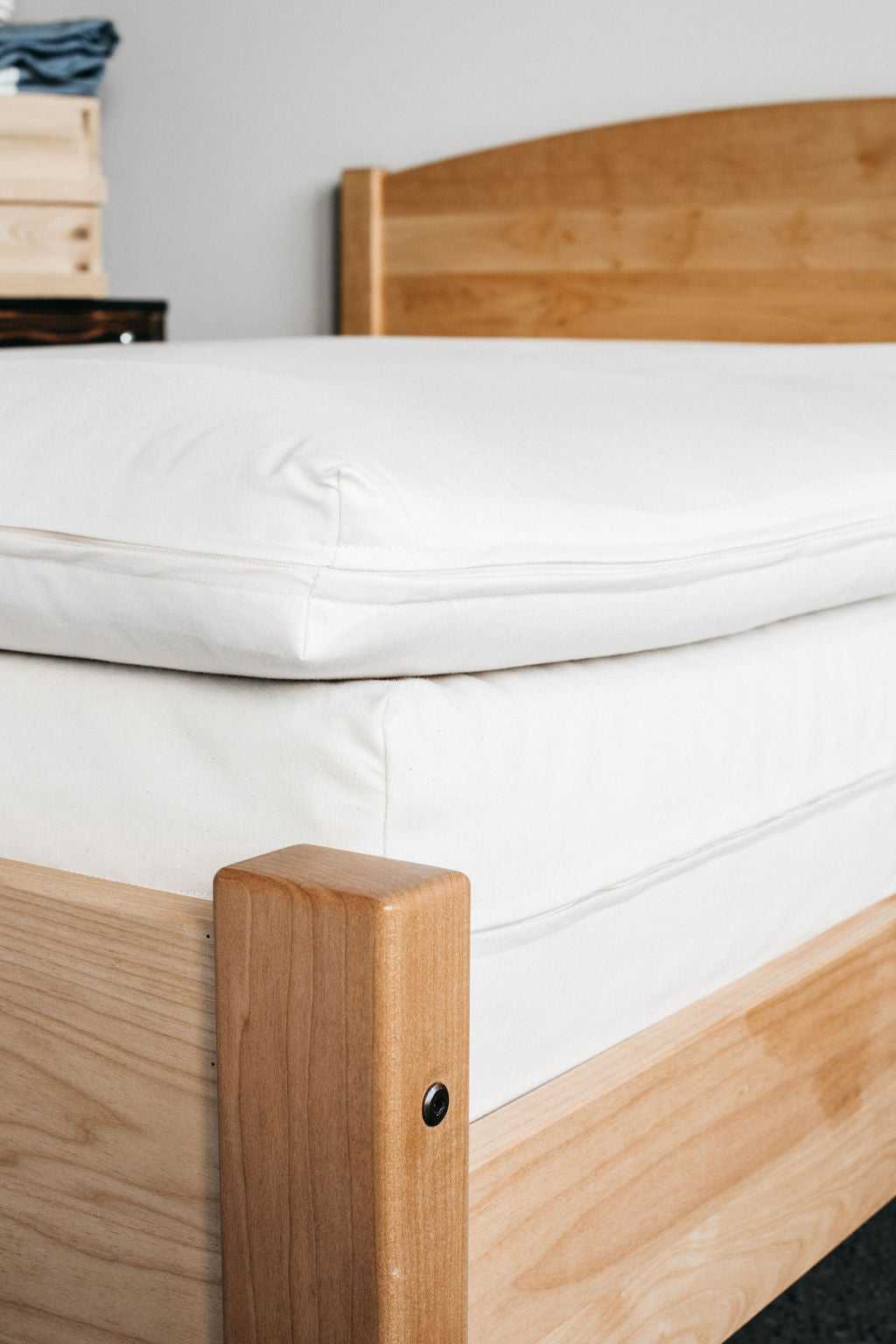
A mattress topper is an added bedding layer placed over a mattress to adjust surface feel and provide an additional comfort barrier. Its thickness, materials, and construction influence cushioning, temperature regulation, and support. Understanding these characteristics helps clarify how a topper differs from mattress pads, sheets, pillows, and the mattress itself.
Natural wool can help moderate temperature by absorbing and releasing moisture, while its resilient fibers create a softly cushioned surface. Wool toppers may suit sleepers seeking breathable bedding with natural materials. Fiber density and quilting affect the feel, so construction details are useful when comparing comfort and seasonal performance.
The Natural Wool & Latex Mattress Topper combines wool’s moisture-managing properties with latex’s responsive cushioning. Latex compresses under pressure and springs back, which can provide a buoyant feel rather than deep, slow-sinking contouring. Together, these materials can add surface comfort while preserving a more responsive sleep surface.
Topper materials can be considered alongside sheets, pillows, and other bedding to create a compatible sleep setup. Mattress depth and fitted-sheet dimensions matter because an added layer increases the height of the sleeping surface. People comparing toppers with organic mattresses may also review material composition, certifications, and care guidance.
When evaluating a mattress topper, consider desired firmness, pressure relief, breathability, material sensitivities, and maintenance requirements. Wool and latex have distinct textures and care needs, which can affect everyday usability. A topper changes the feel of an existing mattress, but it does not replace the underlying mattress’s structural support.
 Bedding